
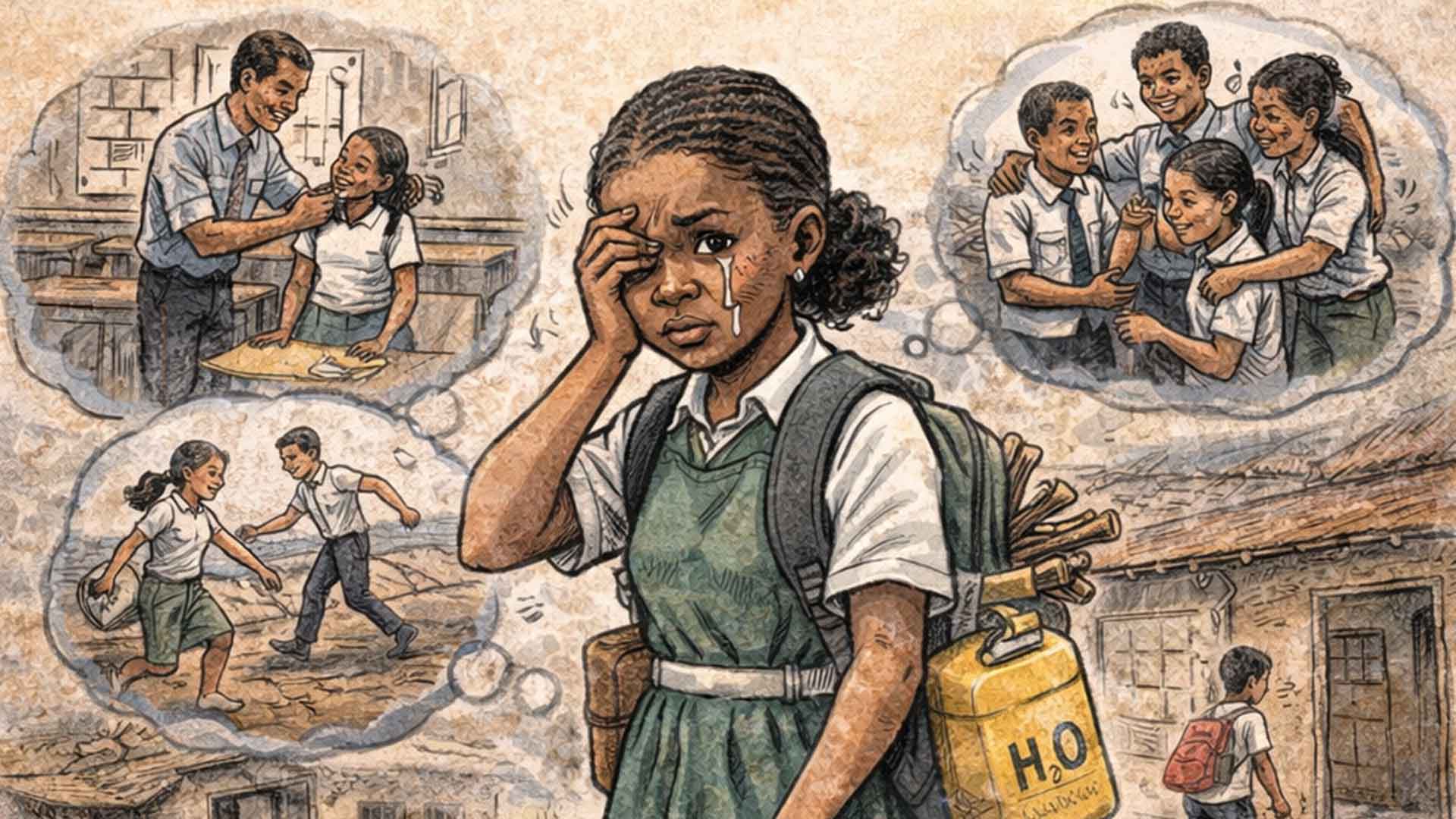
Many adolescent girls in Kenyan Secondary and Junior Secondary schools struggle with the manifold threat of Sexual Gender Based Violence (SGBV), menstruation related issues, low esteem, low aspirations, and insufficient Reproductive Health interventions and information. This manifests in low academic performance, school dropout, and absenteeism. Gender inequities in education are further entrenched by these concerns, which disproportionately affect girls from marginalized and vulnerable locations. SRGBV is a key barrier to academic achievement, as it undermines adolescent girls’ sense of themselves and their ability to succeed as
students. Plan and Child Helpline International, (2019) states that between 500 million and 1.5 billion girls experience violence every year, many within schools. Forms of gender violence are not fixed; they evolve to fit different times, circumstances, and cultures.
This review’s objective is to compile and summarize the available data regarding the effects of gender-based violence (GBV) in Kenyan educational institutions, with a particular emphasis on how these issues affect girls’ educational opportunities. The review examines the factors associated with SRGBV, gaps in GBV service provision, and availability or lack of GBV interventions, such as Sexual Reproductive Health education with a particular focus on junior secondary schools. It also highlights counties’ differences in SRGBV prevalence rates and differences in access to GBV services and provides recommendations.
The methodology included a desk-based study of current scholarly literature, official government policy, and reports from organizations addressing GBV concerns in Kenya, and data from NGOs that run such initiatives to improve girls’ access to education by addressing GBV in educational settings.
What is GBV?
The term “gender-based violence” refers to all forms of, physical violence, psychological violence, violations, and abuse, including but not limited to, economic and financial violence, sexual violence, sexual harassment, gender harassment, stalking, organizational violence, and harassment, including both online and offline contexts. It further describes and includes a continuum of violence and violations, violent behaviors and attitudes based on sex and gender, and always intersects with and mutually shapes other dimensions of inequalities, such as ethnicity, class, age, sexual orientation, and disability (EU, 2022). According to (UNESCO, 2019) Gender based violence (GBV) is tolerated and sustained by social institutions, including the school, the very place where children are expected to be safe and protected. School gender violence (SRGBV) is a fundamental violation of human rights, particularly
those of women and children, and represents a considerable barrier to participation in education, gender equity, and to the achievement of Education for All (EFA) and the Sustainable development Goals (SDGs). Factors Associated with GBV in Learning Institutions
- Cyber Gender-Based Violence: Cyber-based GBV (CBGBV) is a form of violence that occurs online or in person against people based on their gender identity. It is sometimes referred to as ‘cyber terrorism and it includes cyberbullying, online harassment, violations of identity, online sexual exploitation and sexual abuse of children, and other harmful behaviors that are facilitated by technology.
- Sociocultural factors: The students’ cultural origin will always influence believes, thinking and even behavior at the institution. A child who has witnessed marital violence in the home, had an absent or rejecting father or had frequent use of alcohol will tend to adopt that behavior as being normally acceptable (Banda, 2019).
- Economic factors; Girls find it enticing to engage in transactional sex to gain financial support from the “sugar daddy” (sometimes sugar mammy for boys) or rather, financial support from older men/women in return for sexual services rendered.
- Alcohol and substance abuse: According to Atwoli et. al (2011), students who used substances reported negative effects including medical problems, engaging in unprotected sex, relationship problems and poor academic performance.
- Lack of effective policies and systems: Despite having enacted several laws that give direction to the management of GBV, these laws have little effect, especially at the institutions of learning. A lot of the SRGBV cases go unreported due to other factors like cultural beliefs stigma and even coercion.