
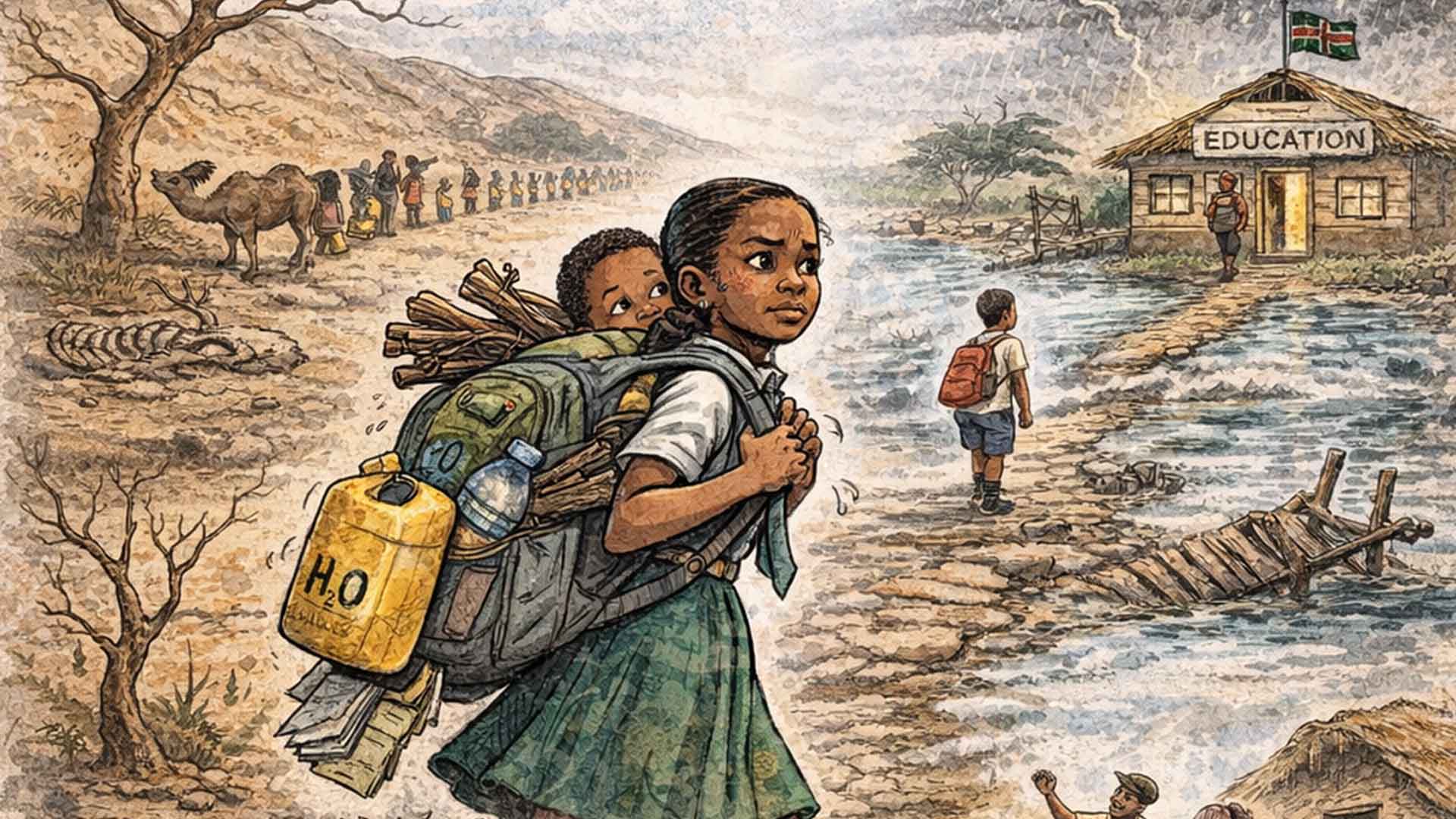
Climate change is significantly affecting education in Kenya, with girls being disproportionately impacted. Recurring climate shocks such as droughts, floods, and erratic rainfall patterns result in food insecurity, displacement, and economic challenges, forcing families to deprioritize girls’ education in favour of survival strategies. Girls are often pulled out of school to assist with household responsibilities, leading to high dropout rates, especially in rural and marginalized communities.
The most vulnerable regions to climate shocks in Kenya are the Arid and Semi-Arid Lands (ASALs), which include counties such as Turkana, Garissa, Mandera, and Wajir. These areas experience prolonged droughts and unpredictable rainfall patterns, leading to severe water scarcity, food insecurity, and displacement. Coastal areas are also susceptible to flooding and rising sea levels, which disrupt both livelihoods and schooling.
Key findings on the impact of climate change on girls’ education include: Increased Dropout Rates: Girls are more likely to drop out of school during climate-induced crises due to their roles in fetching water, managing domestic chores, and caregiving; Early Marriages and Child Labor: As economic conditions worsen, many girls are forced into early marriages or child labour to help alleviate their families’ financial burdens, further reducing school attendance; and Poor School Infrastructure:
Climate shocks often damage school infrastructure, especially in vulnerable regions. This makes it challenging for girls to attend school regularly, particularly when schools lack adequate sanitation facilities, which affects menstruating girls.
The current key actions and interventions in place to mitigate the impact of climate change on girls’ education include: School Feeding Programs: These programs, implemented by organizations like UNICEF and the World Food Programme, are crucial in keeping children, especially girls, in school during food crises. By providing meals, these programs reduce the need for families to withdraw their daughters from school; Climate-Resilient Infrastructure Development: Several government and NGO-led initiatives focus on building climate-resilient schools with water harvesting systems, proper sanitation facilities, and solar power to ensure that. Education continues even during extreme weather events; Awareness Campaigns and Gender-Sensitive Education Programs: Community sensitization campaigns are being conducted to raise awareness about the importance of girls’ education, even during climate crises. Gender-sensitive curricula are being developed to equip girls with adaptive skills to cope with climate change.
Both boys and girls are impacted negatively by climate shocks. However, due to pre-existing patriarchal cultural practices and norms alongside economic hardships girl’s education suffers more rolling back the gender parity gains that have been made so far
The review identified systemic barriers key among them are: Patriarchal Cultural Norms and Gender Inequality; Inadequate Policy Implementation; and Limited Funding for Climate Education.
Finally the key recommendations include: Strengthening Policy Implementation: Increasing Investment in School Infrastructure: Scaling Up School Feeding Programs: Continuous community engagement; and Promoting Gender-Sensitive Climate Education.